


Coming Home to Yourself: Internal Family Systems (IFS) as a Framework for Neurodivergent, Ethnic, Gender, and Sexual Orientation Minorities
- soulwerkcafe
- Jun 10
- 5 min read

There are parts of you that have been working since before you had language for what they were working against. The part that learned to scan the room before deciding how much of yourself was safe to show. The part that kept everything running so nothing fell apart. The part that went somewhere else when the present moment became too much to stay inside. The part still carrying something that happened so long ago it no longer has a clear memory attached to it.
These parts developed in response to real conditions. And for neurodivergent, ethnic, gender, and sexual orientation minorities navigating a world built around a very narrow definition of default, those conditions have been persistent, compounding, and largely unnamed in the spaces that were supposed to help.
Internal Family Systems offers something different.
What Internal Family Systems (IFS) Actually Is
Internal Family Systems, developed by psychologist Richard Schwartz, is a framework that understands the mind as made up of multiple parts, each with a role and a reason for being there. The orientation IFS brings to those parts is one of genuine curiosity. It asks what they are carrying, what they are protecting, and what they needed that they may not have received. That curiosity is the foundation of the work, and it changes the nature of the healing space entirely.
The names IFS gives to parts are descriptive shorthand for the roles they tend to play. What matters more than the labels is what they make possible: a way of relating to the inner world that centers understanding over correction, and compassion over compliance.
At the center of the framework is what IFS calls the Self. The part that has always been present underneath everything this world has asked you to carry. Steady, curious, and compassionate. Capable of holding the rest with care. The work of IFS is finding the way back to that Self, and doing so in a way that brings all the parts along rather than leaving any of them behind.
Why This Internal Family Systems Framework Matters for Multiply Marginalized Communities
Most therapeutic frameworks were developed around assumptions of a stable, coherent self moving through a world that is at least neutral, if not supportive. For neurodivergent, ethnic, gender, and sexual orientation minorities, that assumption has never reflected reality. The inner world of someone who has had to survive racism, ableism, and cisheteropatriarchy looks different, and the parts that developed to navigate those conditions carry a specific kind of weight that most clinical models were never designed to hold.
When you live at the intersection of multiple marginalized identities, your parts develop in direct response to your lived experience. The part that learned hypervigilance was responding to environments where danger was real and unpredictable. The part that mastered code-switching was protecting you in spaces that required your diminishment as the price of entry. The part that goes numb was absorbing what the rest of the system could not process in the moment. These are not signs of disorder. They are evidence of intelligence under sustained pressure.
IFS asks those parts what they have been carrying and whether they are ready to put some of it down. That question, held with genuine curiosity and political awareness of the conditions that shaped those parts in the first place, creates a different kind of healing space than the one most marginalized people have encountered in clinical settings.
The Nervous System and the Body as Part of the Work
For people who have been in survival mode for extended periods, the body itself becomes a site of held experience. Hypervigilance, dissociation, chronic tension, and the inability to fully rest are the body's documentation of what it has been asked to absorb over time. These experiences live in the tissue and the nervous system as much as they live in conscious memory, which means that healing work addressing only the cognitive or narrative level will always be incomplete.
IFS, particularly when integrated with somatic awareness and nervous system support, builds the body and nervous system into more expansive and durable containers for deep trauma work. That capacity develops gradually, and it requires conditions of safety and consistency that many marginalized people have had limited access to. But when those conditions are present, the work becomes possible in ways it was not before. The nervous system begins to widen. The body begins to trust. And the parts that have been working hardest begin to understand that they do not have to carry everything alone.
The Parts That Survived Systems
For neurodivergent people specifically, IFS meets the mind where it actually is. A mind that processes information differently, that has been pathologized and corrected and asked to mask its natural way of being since childhood, has been shaped by that experience in ways that go deep. The parts that developed in response to ableist institutions and normativity-centered schooling and workplaces and clinical spaces carry real burdens. IFS approaches those parts with the same curiosity it brings to all the others, and in doing so creates room for a kind of self-understanding that most neurodivergent people have never been offered.
For ethnic, gender, and sexual orientation minorities, the parts work carries additional layers. There are parts shaped by racial trauma and intergenerational harm passed down through the body and the family system. Parts shaped by the experience of having gender erased, contested, or weaponized. Parts shaped by the labor of moving through LGBTQ+ spaces that center whiteness and Black spaces that center cisheteropatriarchy, and finding yourself insufficiently legible to either. These are the specific textures of harm that belong in the therapy room, named with precision and held with care.
The Self Has Never Left
One of the most consistent things that emerges in IFS work is that the Self has never been destroyed by what people have survived. The harm, the adaptation, the years of survival mode, the protective layers built up over a lifetime, none of it eliminated the Self. It obscured it. And that distinction carries enormous weight for people who have spent years feeling fragmented, performing wholeness, or wondering whether something in them is fundamentally broken.
Coming home to yourself does not mean returning to who you were before the harm. It means finding the part of you that the harm never reached, and building a relationship with that part that can hold everything else with steadiness and care. Doing that work in community, alongside others who understand the specific landscape you have been navigating, changes the nature of the journey entirely.
If this resonates and you are curious about what this work might look like, a consultation is a good place to start.
Coming home to yourself is not a destination, it is an ongoing practice of curiosity, compassion, and connection.
If this article sparked something in you, we invite you to continue the journey with us. Soul Werk Cafe offers events, workshops, and community-centered experiences designed to support healing, self-discovery, and collective care.
Visit our Events Page to learn about upcoming opportunities to connect, grow, and explore what healing can look like in community.
About the Author
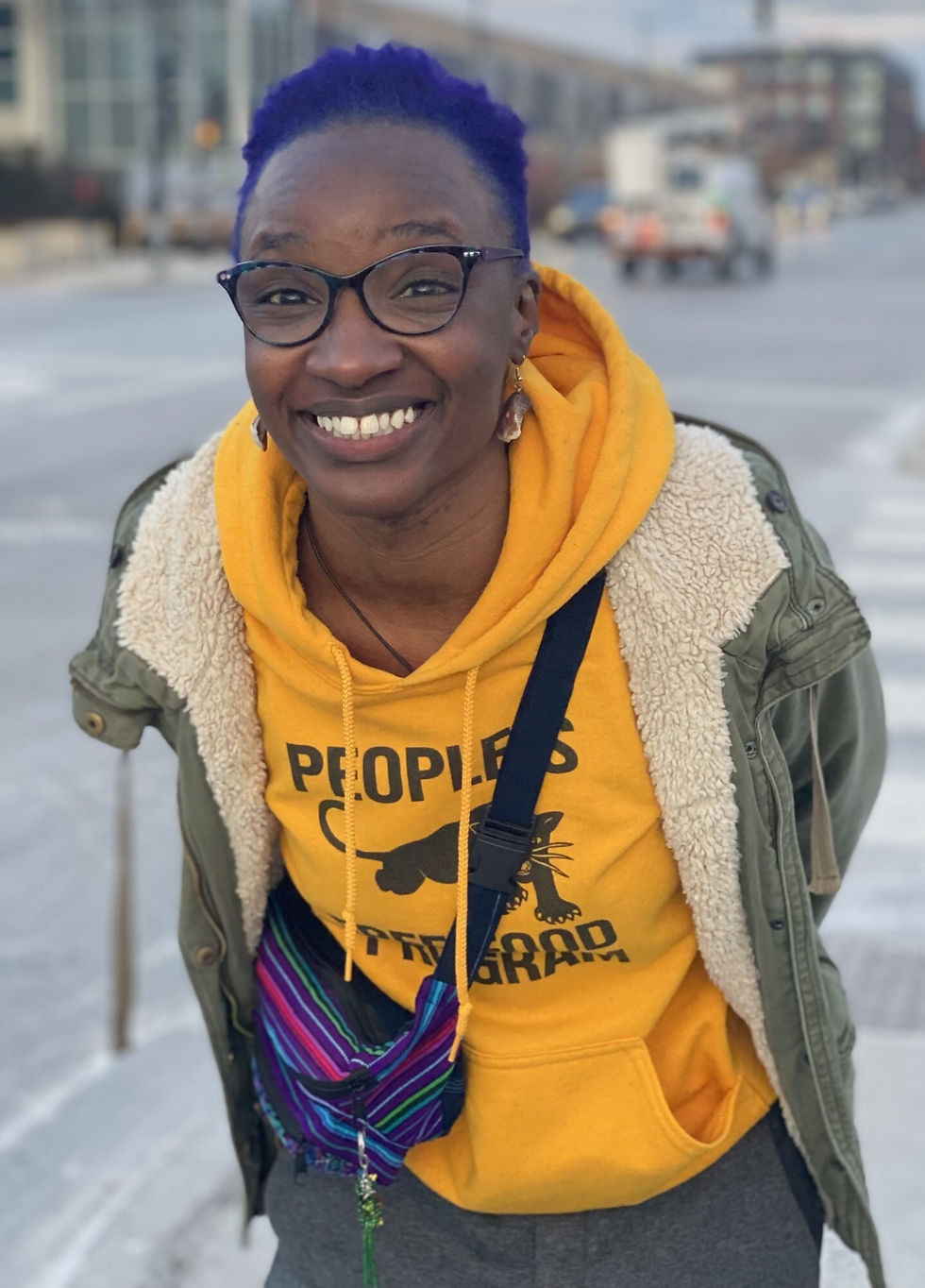
Brittney Thomas, LSW is a Licensed Social Worker who helps individuals navigate trauma, identity, and healing through Internal Family Systems (IFS), somatic practices, and compassionate, justice-centered care.
Interested in working with Brittney?


Comments